Sphygmomanometer Manual
Some healthcare providers use digital for screening but use manual sphygmomanometers to validate readings in some situations. Manual sphygmomanometers consist of aneroid (dial) and mercury (column) devices. Operating these aneroid and mercury devices is nearly the same, except that aneroid...
- Fast Delievery
- Quality Assurance
- 24/7 Customer Service
Description
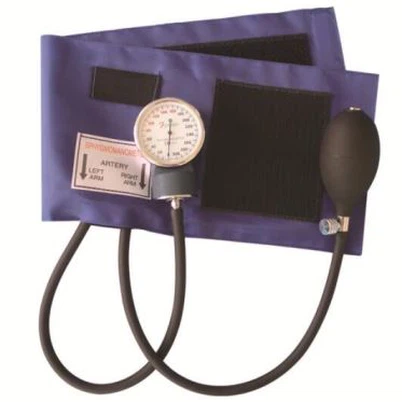
Some healthcare providers use digital for screening but use Sphygmomanometer Manual to validate readings in some situations. Manual sphygmomanometers consist of aneroid (dial) and mercury (column) devices. Operating these aneroid and mercury devices is nearly the same, except that aneroid devices require periodic calibration.A Sphygmomanometer Manual is a device that measures blood pressure. It is composes of an inflatable rubber cuff, which is wrapped around the arm. A measuring device indicates the cuff's pressure. A bulb inflates the cuff and a valve releases pressure. A stethoscope is used to listen to arterial blood flow sounds.
As the heart beats, blood forced through the arteries cause a rise in pressure, called systolic pressure, followed by a decrease in pressure as the heart's ventricles prepare for another beat. This low pressure is called the diastolic pressure.
The Mechanisms of A Manual Sphygmomanometer
Now, a manual sphygmomanometer consists of three parts. And these include the inflatable cuff, the measuring unit, and the mechanism for inflation. And if you were able to experience having your blood pressure checked, you are surely familiar with all of these mechanisms.
Nevertheless, here is the main functions of these parts if you want to dive into that aspect:
The Inflatable Cuff
When you are being checked for your blood pressure, the first thing that nurse or the doctor will do to you is to let your arm stretch towards him or her. As for which arm, it actually depends. And once you are able to stretch your arm out, a soft lengthy cloth-like material will be placed around your arm covering your pulse where it produces the strongest sound.
This material is apparently the inflatable cuff. It is partially stretchable but it is totally adjustable depending on the size of your arm. And placing it around your arm is not just a simple cover-over. The nurse or doctor will ensure that the inflatable cuff will totally cover all the extra spaces.
The Measuring Unit
The second part of a sphygmomanometer is the measuring unit. Apparently, there are two classes of manual sphygmomanometers. And these classes largely vary depending on the specific type of the measuring unit. These are the mercury manometer and the aneroid gauge.
In most clinics and medical institutions, the most common type of measuring unit that normally comes in the sphygmomanometer is the mercury manometer. And more often than not, it is called as the gold standard.
As it appears, this type do not need recalibration. Unlike the aneroid gauge units, mercury manometers deliver more accurate results.
On the other hand, the aneroid gauge units are quite tricky to use. But they are safer in terms of its materials since it does not have mercury in it. Even so, calibration is largely needed in this measuring unit. This is why it is often referred to as the mechanical sphygmomanometer.
But while they are pretty challeng


Send Inquiry
You Might Also Like