- Fast Delievery
- Quality Assurance
- 24/7 Customer Service
Description
Product Introduction
HS-FR18
Clinical Aneroid Sphygmomanometer
-
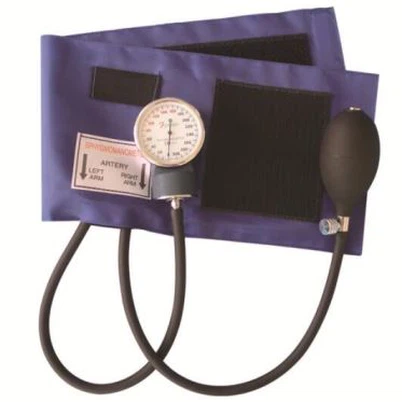
Clinical aneroid sphygmomanometer, as its name implies, is an instrument that uses mechanical properties to measure the blood pressure.
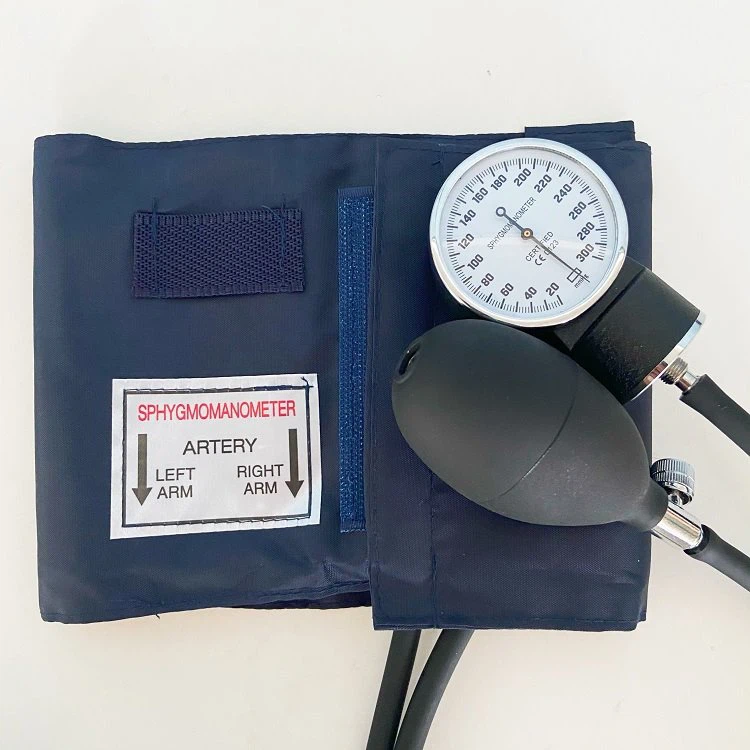

Easy Reading
the clinical aneroid sphygmomanometer has a big and clear dial, which is good for you to read the value.

Simple Operation
you can understand the measuring procedure after read the manual.

Convenient Carrying
the bag of the clinical aneroid sphygmomanometer makes it potable and easy to carry.
About Packing(no stethoscope)

About Clinical Aneroid Sphygmomanometer
The Usage of clinical aneroid sphygmomanometer

Let client rest in bed for several minutes before taking blood pressure. Expose your right arm, always exposing your shoulder, with your elbow straight and your palm flat.
Place the sphygmomanometer on the bed or table so that the "0" point of the sphygmomanometer is at the same level as the patient's heart.
Wrap the cuff of the blood pressure monitor around the client's upper arm. The lower edge of the cuff should be 2 ~ 3 cm away from the elbow fossa, not too tight, not too loose.
Wear a stethoscope, feel the throb of the brachial artery with your hand in the patient's elbow fossa, and then place the stethoscope on it, at this time you can hear the beat of the artery.
Close the balloon, pump air to the cuff, pressure to brachial artery pulsating sound can not be heard, and then slowly release the valve, reduce the pressure, and pay attention to the mercury column pointed to the scale, until you hear the first pulsation. The scale that the mercury column is pointing to is the systolic pressure.
The pressure continues to decrease gently until the pulsating sound increases until it suddenly becomes soft and weak, at which point the scale indicated is diastolic (note that the pulsating sound does not disappear completely).
Blood pressure is generally measured two or three times in a row, and the lowest value is taken.
Company Profile

Send Inquiry
You Might Also Like