






- Fast Delievery
- Quality Assurance
- 24/7 Customer Service
Description
Product Description
thermometers veterinary

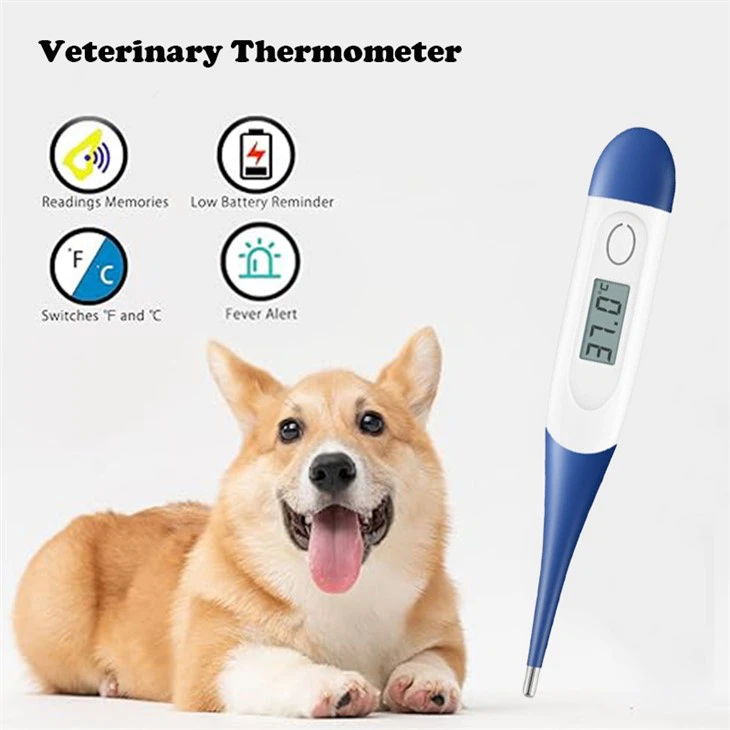
Veterinary thermometers are designed primarily to accurately measure the body temperature of animals, so they are usually characterized by high accuracy and safe measurement. For example, some veterinary thermometers use infrared detection technology, which can provide highly accurate measurements while keeping the measurement clean and quick. In addition, these thermometers also have functions such as automatic shutdown, buzzer prompts, fever alarms, and portable and lightweight designs, making the use process more convenient and efficient.
Biggest difference between the human thermometer and the veterinary thermometer: The threshold temperature for the beeper function is different.
When the temperature reaches 37.5℃ (99.5℉), the human thermometer will emit a BBB sound.
For veterinary thermometers, the alarm temperature is different.
For small animals such as cats and dogs, the alarm temperature is 39℃ (102.2℉). When the body temperature of these animals exceeds 39, the thermometer will emit a BBB sound.
Product structure
The electronic thermometer is composed of a temperature sensor, a liquid crystal display, a button battery, a dedicated integrated circuit and other electronic components. It can quickly and accurately measure human body temperature. Compared with the traditional mercury glass thermometer, it has the advantages of convenient reading, short measurement time, high measurement accuracy, memory and buzzer prompt. In particular, the electronic thermometer does not contain mercury, is harmless to the human body and the surrounding environment, and is particularly suitable for use in homes, hospitals and other occasions.
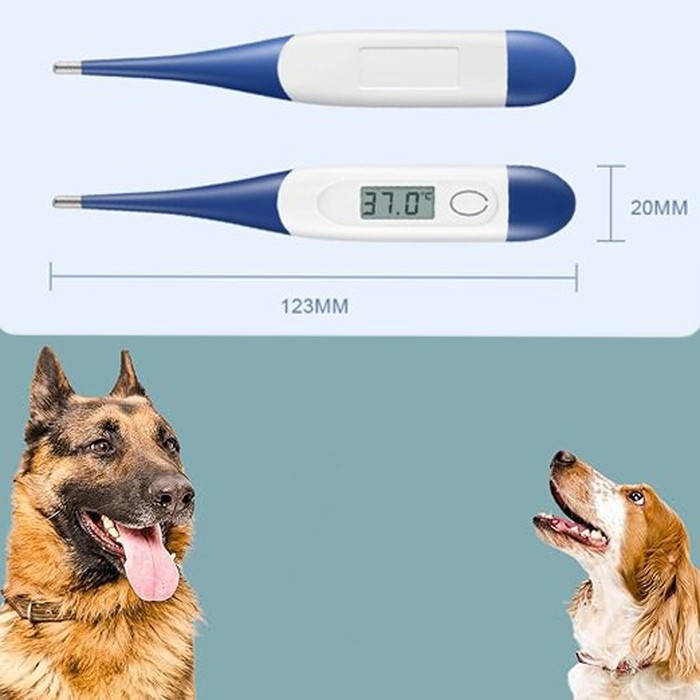

Veterinary infrared thermometer
Precautions
1. The infrared probe protective lens is the most vulnerable part of the thermometer, so the probe lens must be carefully protected.
2. How to clean the probe lens: wipe it gently with a cotton swab or soft cloth dipped in water or low-proof alcohol.
3. Do not charge or throw the battery into the fire. Please discard the used battery at the designated recycling location. Using unqualified batteries may cause fire or explosion.
4. Note: When this product is not used for a long time, the battery should be removed.
5. This product must not be immersed in water or exposed to direct sunlight.
6. Do not drop or collide the product heavily, otherwise it will cause damage.
thermometers veterinary
When you touch the body of a chicken or mammal with your hands, you will feel warm; but when you touch the body of amphibians and reptiles such as fish and frogs, you will feel cold. The former kind of animals have a perfect body temperature regulation mechanism, which can keep the body temperature relatively stable when the ambient temperature changes, so they are called homeothermic animals or warm-blooded animals. The latter kind of animals also have the ability to control the temperature of the body. The worker bees among the bees also have the ability to control the temperature. The temperature changes with the change of the ambient temperature, so they are called cold-blooded animals or cold-blooded animals.
Except for birds and mammals, other animals are cold-blooded animals, and their body temperature can change with the temperature of the external living environment.
Hosothermic animals maintain a certain body temperature. The body temperature of birds is generally in the range of 37.0-44.6℃, and that of mammals is generally about 25~37℃, thus reducing their dependence on the environment.

Normal range of animal body temperature
 thermomthermometers veterinary

Anal temperature measurement for dogs:
1. Apply a little Vaseline to the top of the thermometer to lubricate it so as not to cause pain to the dog during insertion.
2. It is best to find an assistant to help. The assistant fixes the dog's head and forelimbs and comforts it, and the person measuring lifts the dog's tail.
3. Gently insert the thermometer about 2cm into the dog's anus.
4. Generally speaking, the thermometer stays in the anus for about 2 minutes. The owner's supervision cannot be left during this period.
5. Pull out the thermometer to read the temperature.
6. The thermometer is disinfected with alcohol and stored.
Measure your dog's temperature through the base of his hind legs:
1. Raise the dog's legs and clamp the thermometer on it, so that the hind legs and belly can tightly clamp the thermometer.
2. Electronic thermometers usually automatically alarm after the measurement is completed.
3. Electronic thermometers are easily interfered with, so it is recommended to measure three times and take the average value.
Company profile


Good feedback

Send Inquiry
You Might Also Like


