Medical Blood Glucose Meter
medical blood glucose meter
Measurement Range Glu:20~600mg/dL(11-33.3mmol/L)
Specimen:Fresh capillary or venous whole blood
Units: mmol/L,mg/dL
Memory: 400 records
Automatic shut Off: 1min after using
- Fast Delievery
- Quality Assurance
- 24/7 Customer Service
Description
Best Selling

BGM-101
Blood Glucose Meter
BGM-102
Blood Glucose Meter

BP-208
Blood Pressure Monitor

HS-08
Digital Thermometer
Product Description

Medical blood glucose meter
1. Measurement Range Glu:20~600mg/dL(11-33.3mmol/L)
Specimen Fresh capillary or venous whole blood
2. Power Source: 3.0V CR2032 lithium battery
3. Battery Endurance: Approximately3000 tests
4. Units: mmol/L,mg/dL
5. Memory: 400 records
6. Automatic shut Off: 1min after displaying results
medical blood glucose meter

The new technology in blood glucose measuring.
With the advancement in technology, blood glucose measuring has significantly improved in accuracy and convenience. The traditional method of testing blood sugar levels involved pricking one's finger with a lancet and drawing blood. This method often caused discomfort and inconvenience, especially for people who need to monitor their blood sugar levels frequently.
However, with the introduction of new technology, monitoring blood glucose levels has become more convenient and less painful. One such technology is continuous glucose monitoring (CGM), which involves a small sensor placed on the skin that measures blood glucose levels continuously.
CGM offers numerous benefits over traditional blood glucose monitoring methods. For starters, it does not require frequent finger pricking, which means less pain and less interruption to daily life. The data provided by the CGM device is also more accurate, providing real-time information on blood glucose levels.
Another technology that revolutionized the way blood glucose is measured is the development of the flash glucose monitoring system. This involves wearing a small wearable sensor on the upper arm that provides a continuous reading of the glucose level through a handheld reader.
These new technologies have made it easier for people with diabetes to monitor their blood sugar levels and adjust their treatment accordingly. They have also helped improve their quality of life, enabling them to live more independently and with fewer interruptions to their daily routines.
The measurement time of the medical blood glucose meter
The measurement time of blood glucose meters typically ranges from a few seconds to a minute. This means that individuals can get an accurate reading of their glucose levels quickly and easily, without having to wait for long periods of time. This is especially beneficial for individuals who need to monitor their glucose levels frequently, such as those with type 1 diabetes.
5S Rapid Test

400 Memories

The memory function of a blood glucose meter is an incredibly helpful tool for those living with diabetes. This feature allows individuals to track their blood glucose levels over time, making it easier to manage diabetes and make informed decisions about their health.
With the memory function, the blood glucose meter stores the readings taken by the user. This stored information can then be used to create graphs and charts, which help to detect patterns and trends in blood glucose levels. By tracking these patterns, individuals can adjust their diet, exercise routine, and medication as necessary to keep their blood glucose levels in a healthy range.
Furthermore, the memory function is particularly useful for healthcare professionals who are responsible for managing the care of their diabetic patients. With access to the patient's blood glucose readings, the healthcare provider can provide personalized advice and make recommendations on the necessary changes to medication dosage, lifestyle adjustments, and more.


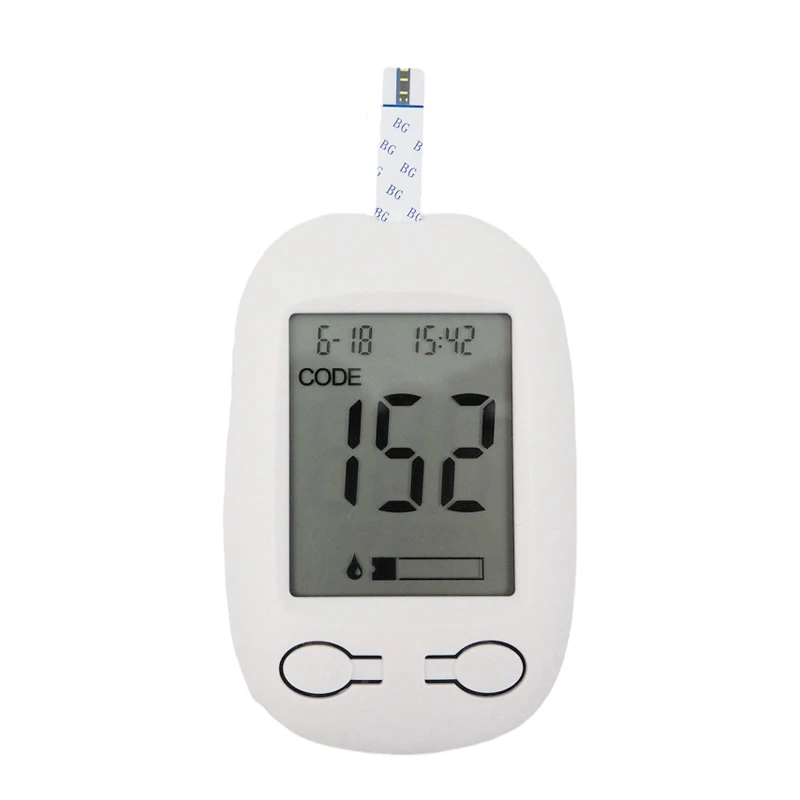
Liquid Crystal Display (LCD): Show your test results, and help you through the testing process.
Mode button: Press scroll through test results and adjust meter setting.
Outermost shell: The shell of the meter.
Strip channel/ Code chip channel: Test strips are inserted into this area to perform a test. Code Chips are inserted into this channel to calibrate the meter.
Meter use and precautions
- The meter is pre-set to display blood glucose concentration in either millimole per liter (mmol/L) or milligrams per deciliter (mg/dL) depending on which unit of measure is standard in your country..Keep the Strip Channel clean.
- Keep the meter dry and avoid exposing it to extreme temperatures and humidity.
- Do not drop the meter or get it wet. If the meter is dropped or has gotten wet, check the meter by running a quality control test. Refer to the Quality Control Test for instructions.
- Do not take the meter apart. Taking the meter apart will void the warranty.
- Refer to maintenance for details on cleaning the meter.
- Keep the meter and all associated parts out of reach of children.
- Caution: Follow proper precautions and all local regulations when disposing of the meter and used batteries.
Test strip precautions
- For in vitro diagnosis. Test strips can only be used for in vitro testing.
- Do not use test strips that are torn, bent, or damaged in any way. Do not reuse test strips.
- Before running a blood glucose test, make sure that the code number on the meter display matches the number is shown on the test strip canister or on the pouch.
- Keep the test strip canister or the foil pouch away from children and animals.
- Consult your physician or healthcare professional before making any changes to your treatment plan based on your blood glucose test results.
- Not intended for the diagnosis of or screening for diabetes mellitus.
- Not for use on neonates.
- When testing alternative sites, test when in steady state only (such as before eating,before taking medication, before exercising, or 2 hours after eating).

How does the blood glucose level fluctuate in a day?
The blood glucose level in our body fluctuates throughout the day due to various factors such as our diet, insulin production, physical activity, and stress levels.
After we eat a meal that contains carbohydrates, our blood glucose level rises as our digestive system breaks down the carbohydrates into glucose. This blood glucose is then absorbed into our bloodstream and used by our cells as energy.
However, the body keeps glucose levels within a narrow range by releasing insulin from the pancreas, which signals the cells to take up glucose from the bloodstream. This can cause a dip in blood sugar levels after a meal.
Physical activity can also cause fluctuations in blood glucose levels. During exercise, the muscles use up glucose for energy, leading to a drop in blood sugar levels. However, if the exercise is prolonged or intense, the liver can release stored glucose, causing an increase in blood glucose levels.
Stress can also affect blood sugar levels. In response to stress, the body releases hormones that can cause an increase in blood glucose levels.
Product Accessories


About us


good Feedback

Send Inquiry
You Might Also Like