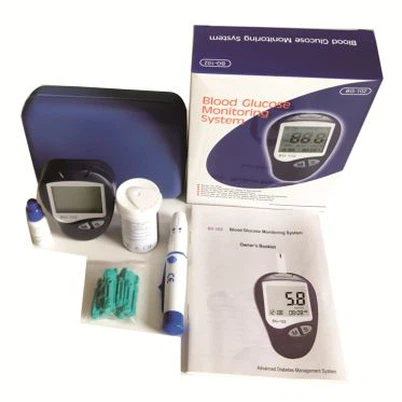
How Much Is The Difference Between The Blood Glucose Measured By The Blood Glucose Meter And That Measured In The Hospital? In This Way, We Can Figure It Out By Ourselves
Leave a message
A lot of friends ask: the blood sugar measured by the blood glucose meter at home is always different from that measured in the hospital. What should I do when it is high or low?
People who have measured blood glucose know that there is a difference between measuring blood glucose at home and in hospital. The former is measured by finger tip blood glucose meter, while the latter needs to collect venous blood for biochemical analyzer. Because the current blood vessel management standard in China is formulated by the results of later tests, so in the diagnosis of diabetes, it can only be based on the results of later tests 。
But for people with diabetes, monitoring blood glucose is an indispensable part of daily treatment, which needs to be carried out frequently or even seven times a day. It is not realistic to go to the hospital to collect venous blood every time, so the home blood glucose meter has been widely used. Some people may find that the blood glucose measured by blood glucose meter and biochemical meter in hospital at the same time will be different. Is this normal? Or how much difference is acceptable? Is there a standard of judgment?
The corresponding clinical research and comparison are also made. Even with the venous blood drawn once, the results measured on different biochemical instruments are also different, with an average difference of about 0.83mmol/l. Meanwhile, the fingertip blood is taken to measure the blood glucose, with a maximum correlation of about 15% with the results measured in venous blood. This will give a hint to those who measure blood glucose at home. The blood glucose measured by the home blood glucose meter may be higher or lower than that measured in the hospital. Therefore, the blood glucose measured at home can only be used as a method to roughly understand the blood glucose level, rather than as a basis for diagnosing diabetes.
It may be said that since there are so many differences, is it necessary to use a blood glucose meter to measure blood glucose?
Of course, it's necessary, because people's blood sugar changes at any time of the day, and it's difficult to control blood sugar to reach the standard at every time point. The fasting blood sugar and the two-hour postprandial blood sugar are just the representatives of the whole day's blood sugar, and there are many factors that can affect the blood sugar at these two time points. Therefore, the control of blood sugar usually gives a range, which is not required to be measured every time The results are the same, as long as the requirements of the control range are met, for example: the fasting blood glucose is required to be controlled below 7.0mmol/l, which is the most ideal to be able to reach below 6.1mmol/l; the 2-hour postprandial blood glucose is required to be controlled below 10.0mmol/l, which is the most ideal to be able to reach below 7.8mmol/l. The domestic blood glucose meter can fully meet the needs of this monitoring.
In addition, we need to pay special attention to the control of blood sugar, because in the harm of blood sugar to the body, the harm of hypoglycemia ranks first, followed by the greater the risk of blood sugar fluctuation, the greater the harm, and the simple high blood sugar only ranks third, so we should pay enough attention to the monitoring of blood sugar.