


Is It OK To Use Fetal Doppler Everyday?
Leave a message
Is it OK to use fetal Doppler everyday?
Using a fetal Doppler every day can be a wonderful way for expectant mothers to bond with their growing baby and monitor their baby's heartbeat. Many doctors and midwives encourage the use of a Doppler to track the health and development of the fetus.
Regular use of a fetal Doppler is generally safe and does not cause harm to either the mother or the baby. In fact, listening to the baby's heartbeat can provide reassurance and peace of mind for many expectant mothers.
However, it is important to remember that a fetal Doppler should not be used as a substitute for medical care. Regular prenatal visits with a healthcare provider are crucial for monitoring the baby's health and development.

Overall, using a fetal Doppler every day can be a positive experience for expectant mothers. It provides a special opportunity to connect with their growing baby and can offer comfort and reassurance throughout the pregnancy.
How does the fetal doppler monitor work?
The fetal doppler monitor is a medical device that is used by healthcare professionals to monitor the baby's heartbeat during pregnancy. This device is also used by expectant parents who want to listen to their baby's heartbeat at home.
The fetal doppler monitor works by emitting high-frequency sound waves, which bounce off the baby's heart and create an echo. The monitor then detects the echo and converts it into an audible sound, which allows the healthcare professional or parent to hear the baby's heartbeat.
The fetal doppler monitor is designed to be non-invasive, meaning it does not require any surgical procedure or needle insertion. The device is usually placed on the mother's abdomen, where it can pick up the baby's heartbeat.
Using a fetal doppler monitor is a safe and effective way to monitor the baby's heartbeat during pregnancy. It can be used from about 8-10 weeks of pregnancy and can provide reassurance to parents about the baby's well-being.
In conclusion, the fetal doppler monitor is a valuable tool for monitoring the baby's heartbeat during pregnancy. It is safe and non-invasive, and can provide reassurance to both healthcare professionals and expectant parents.
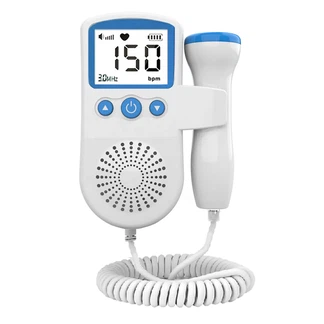
Specifications:
1. FHR Measuring Range:50~230BPM
2. Frequency:2.50MHz
3. Accuracy: ± 2 BPM
4. Power Consumption:< 0.8 W
5. Suitable for use after the 12th week of pregnancy
6. After 1 minute no signal, power off automatically
7. battery: DC 3V (2 x AA) alkaline batteries
8.Weight: about 155g (without battery)
9. size: 12x8x3cm
Have a look at our products!


How do you use the fetal doppler monitor?
1. Choose a quiet and comfortable place to perform the monitoring. You can lie down on your back or side.
2. Apply a small amount of ultrasound gel on the abdomen area to enhance the signal and prevent any friction.
3. Turn on the doppler monitor and adjust the volume and frequency settings to the appropriate level.
4. Gently move the device around your belly, starting from the lower abdomen and moving upwards.
5. Listen for the baby's heartbeat, which should sound like a rapid thumping noise. It may take a few minutes to locate the heartbeat.
6. Once you have located the heartbeat, count the beats per minute (BPM) using a stopwatch or the built-in timer on the doppler monitor.
7. Record the BPM and listen to the heartbeat for a few minutes to ensure it remains steady and within the normal range.
8. Clean the device and store it in a safe place for future use.
Using the fetal doppler monitor can be a rewarding experience for expectant parents as it allows them to connect with their baby and hear the reassuring sound of their heartbeat. However, it is important to remember that the fetal doppler monitor is not a medical device and should not replace regular prenatal check-ups with a healthcare provider.
Why do you choose the fetal doppler monitors?
As a healthcare professional, I choose fetal doppler monitors because they allow me to provide high-quality care to my patients. Fetal doppler monitors are non-invasive devices that allow me to listen to the fetal heart rate and monitor the well-being of the fetus. They are simple to use, safe, and provide real-time information about the baby's health.
Fetal doppler monitors are particularly useful during prenatal visits, especially for patients who are high-risk or have a history of complications during pregnancy. These monitors allow me to detect any changes in the fetal heart rate that may signal a problem and take appropriate action.
Moreover, fetal doppler monitors provide comfort to the expecting parents. By listening to the fetal heartbeat, parents can feel reassured and develop a stronger emotional connection with their baby. This can be especially important for couples who have experienced miscarriages or have had difficulty conceiving.
In conclusion, I choose fetal doppler monitors because they are a valuable tool in my clinical practice. They provide crucial information about the health of the fetus and can give expecting parents peace of mind. Most importantly, fetal doppler monitors allow me to provide the highest quality of care to my patients.


