The Most Complete Guide To Reducing Fever Children Have A High Fever Of 39 Degrees in The Middle Of The Night, So Don't Be in A Hurry!
Leave a message
The thing that a mother fears the most is to feel that the temperature of the little person next to her is not right in the middle of the night, and then start to panic and panic.
Regarding the response to children's fever at night, for example what temperature is a fever? What to do if your child has a fever at night? When can I take antipyretics, and when must I be sent to the hospital? Break it apart, crush it, and then tidy it up again. Babies who need it can store it.
how many degree is fever for baby?
There is a lot of controversy about whether 37 degrees is considered a fever, but in fact 37 degrees is within the normal range for babies.
The baby's body temperature regulation function is not yet fully developed. In order to make the body feel comfortable and maintain a constant temperature, the temperature set by itself will be higher than that of adults. In addition, when the baby is vaccinated during the teething period, the body temperature will also be high.
Therefore, if you want to judge whether your baby has a fever, of course you cannot follow the standard of 37°C. Judging the temperature of a baby's fever in clinical work, it is generally defined as a fever if the armpit ≥ 37.5°C or the rectal temperature ≥ 38°C.
When should I give my baby antipyretics?
When a baby's fever exceeds 38.2°C, many people's first reaction is to immediately feed antipyretics.
actually not.
Fever is not a disease, but a defense reaction of the baby's body when it encounters a feeling. Fever does not harm the baby (unless it is extremely high), but it can cause physical discomfort to the baby, such as chills, dizziness, etc.
The reason why the baby is given antipyretics is to relieve the discomfort caused by the baby's body due to fever. The antipyretics themselves have no therapeutic effect.
Therefore, judging whether to give the baby antipyretics should not be based solely on the body temperature, but also on the baby's mental state. If the baby's body temperature is below 38.2 ℃ and the mental state is good, then on the premise of appropriately raising the room temperature, some special nursing methods can be adopted, such as wearing as little clothes as possible to help the baby dissipate heat. At the same time, try to ensure that you drink a small amount of water frequently, because the process of reducing fever is mainly achieved by evaporating water from the skin.
How to care for baby with fever at night?
The baby has a fever at night, which is the most worrying. When I went to the hospital, I was afraid that the baby would be affected by queuing up for registration. If I didn’t go to the hospital, the baby’s body temperature would fluctuate, even after taking antipyretics.
Mothers, don’t panic when your baby has a fever at night. You can refer to the following coping methods.
✔ First measure body temperature and observe mental state.
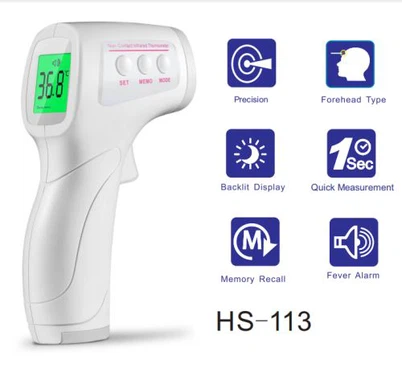
When the baby is found to have a fever, mothers should measure the body temperature as soon as possible. It is recommended to use an electronic thermometer to measure the armpit. Then, according to the baby's body temperature and mental state, decide how to deal with it.
✔ Physical cooling
If the body temperature is below 38.2°C and the baby's mental state is OK, you can apply warm water to the baby's forehead, take a warm bath, reduce clothes, reduce fever, fan, etc. to help the baby lower the temperature.
If the body temperature exceeds 38.2°C and the baby has obvious discomfort, you can give the baby antipyretics.
When it comes to antipyretics, many mothers have encountered this situation, that is, they find that the antipyretics at home have expired, or they have run out, and then they will think of using common cold medicines instead.
It is recommended not to give your baby cold medicine rashly, because there are many reasons for a baby to have a fever, and cold medicine does not necessarily contain antipyretic ingredients and cannot reduce fever.
✔ Go to the hospital
After the baby has a fever, as long as any of the following situations occur, he must go to the hospital in time.
Babies under 3 months should go to the hospital if they have a fever.
Babies over 3 months old should go to the hospital immediately if they have a fever over 40°C or are in a bad state of mind.
Although it has not reache40°C, but the mental state is not good, such as headache, convulsions, rash, vomiting, diarrhea, etc., I need to go to the hospital.
If you have a fever for more than 72 hours, you should go to the hospital.
How to properly use antipyretics at home?
Regarding antipyretics, I want to draw 3 more points for mothers.
The first one, after taking the antipyretics, the baby’s body temperature can’t drop, and he wonders if he should take it again?
Notrecommended. After taking antipyretics, even if the baby’s body temperature does not drop, you can’t take them again. The interval between the two medications should be more than 4~6 hours, and the medicatio
should not exceed 4 times within 24 hours. Frequent use of the drug may result in injury from overdose.
If the baby's body temperature still does not come down after taking antipyretics, it is recommended to physically cool the baby down first, reduce the temperature in the house, wear less clothes, etc. If the body temperature still does not come down, you can go to the hospital to find out the cause of the fever.
Second, can two antipyretics (such as acetaminophen and ibuprofen) be used alternately to reduce fever?
It is not recommended either. Although there are some differences in the reduction of body temperature when the two antipyretics are used alternately, they cannot improve the discomfort caused by the baby's fever, and at the same time increase the risk of adverse reactions of the antipyretics. Furthermore, the doses, intervals, and usage of the two antipyretics are different, and it is easy for mothers to remember wrongly, leading to the risk of overdose of antipyretics.
The third one is that the baby has a high fever. Do I need to take antipyretics before going to the hospital? Will it affect the doctor's judgment?
Taking antipyretics generally will not affect the doctor's judgment and treatment. In the case of high fever, it is recommended to cool down the baby and go to the hospital to register and queue up at the same time.
In short, the baby's resistance is relatively weak, and it is normal to have a sudden cold and fever, but it is more annoying to have a fever at night. But as long as you understand some basic methods of fever care, there is no need to panic.
Finally, as a small reminder, regularly clean up the standing medicines at home, prepare the antipyretics and antipyretics commonly used by babies, in case of emergencies.